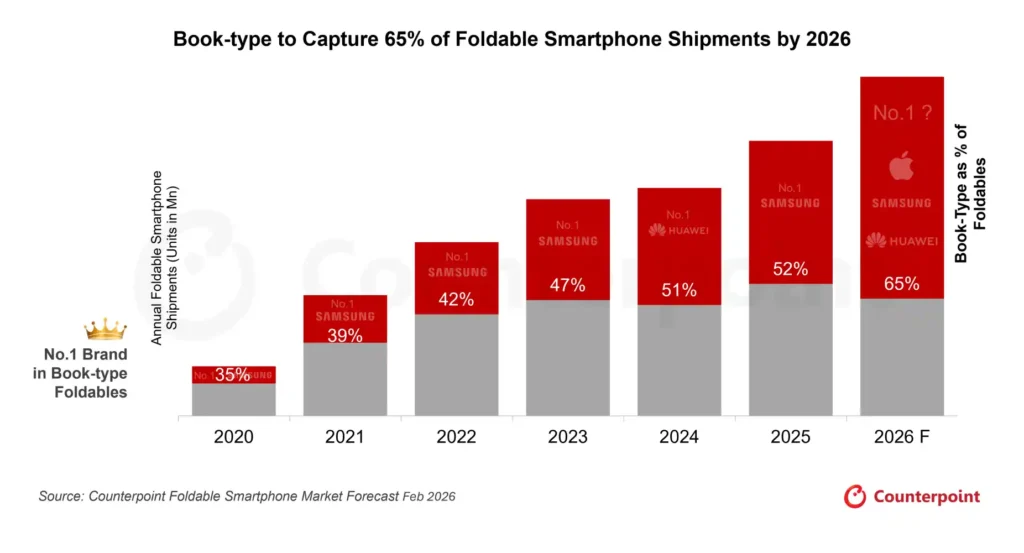
The foldable smartphone market is heading in one direction: bigger. Book-style devices like Samsung’s Galaxy Z Fold are set to dominate, capturing 65% of global sales as compact clamshells fade into the background.
It’s a shift driven less by consumer demand and more by cold economics. Building foldables is expensive, and manufacturers need to justify the cost. A $2,000 phone with a tablet-sized screen is easier to sell at a premium than a $1,500 flip phone that does less. Samsung and Google aren’t abandoning smaller models out of preference. They’re chasing margin.
The numbers back this up. By 2025, book-style folds already hold 52% of the market despite their price. That tells you something: the people buying foldables aren’t casual upgraders. They’re power users willing to pay for productivity, multitasking, and specs that rival laptops. Clamshells, for all their novelty, don’t offer enough utility to compete at that price point.

Samsung has tested both formats for years, but recent signals suggest they’re ready to lean harder into larger screens. Google appears to be following the same path. It’s not innovation. It’s optimization.
What might accelerate this trend is Apple. When the company finally enters the foldable space, it’s expected to skip the flip entirely and go straight for a book-style device. That alone could reshape the market overnight, given Apple’s track record of turning experimental tech into mainstream expectation.
For now, foldables remain niche. But if book-style models are the future, it’s a future built around profitability, not accessibility. The question isn’t whether larger folds will win. It’s whether most people will ever afford them.