News
Apple Beats Samsung in Global Smartphone Shipments for 2025

The smartphone throne changed hands last year, at least according to Counterpoint Research. Apple grabbed 20% of global shipments in 2025, just enough to slip past Samsung’s 18%. It’s a narrow win, but notable given how tightly these two have traded the lead for years.
The gap isn’t dramatic. Apple shipped 10% more units than in 2024, driven by the iPhone 17 launch and lingering demand for the iPhone 16 in Japan, India, and Southeast Asia. Samsung, meanwhile, grew 5% year-over-year and held onto a 19% share globally—respectable, especially with the Galaxy S25 and Z Fold 7 both landing well in premium segments.
Samsung’s volume still leans heavily on its Galaxy A series, which moves units in markets where price matters more than flagship specs. The company saw momentum in Japan and its traditional strongholds, but took hits in Latin America and Western Europe where competition tightened.

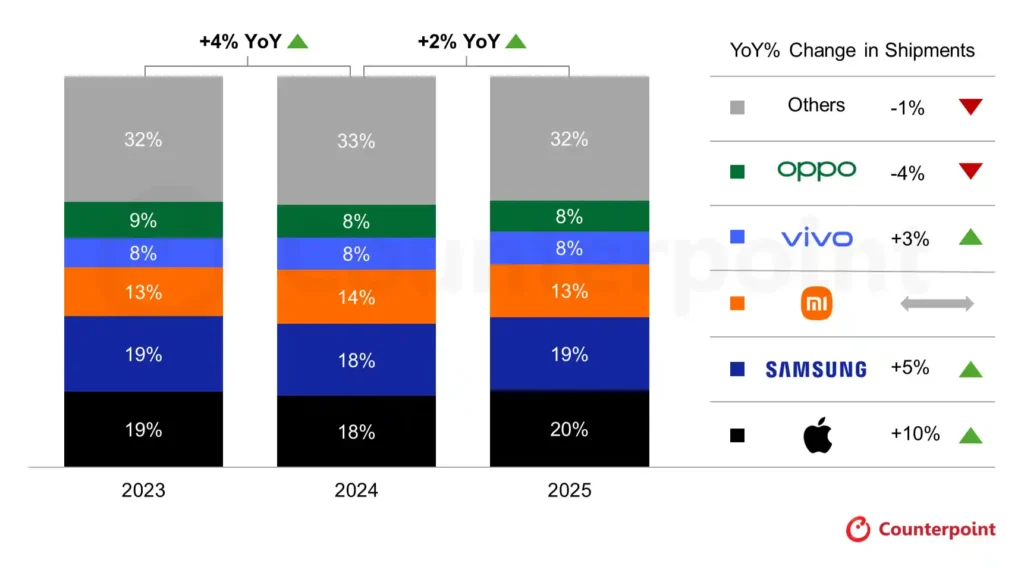
Global shipments rose 2% overall in 2025, the second straight year of growth. That’s largely thanks to 5G adoption in emerging markets and broader access to financing, which opened the door for more people to upgrade.
Worth noting: these figures come from one research firm. IDC, Canalys, and others track the same data and don’t always agree on the pecking order. The margins are thin enough that methodology can tip the scales.
What’s clear is that Apple and Samsung aren’t pulling away from each other. They’re just swapping positions depending on who had the better quarter or stronger launch cycle. The real story is how close it remains.