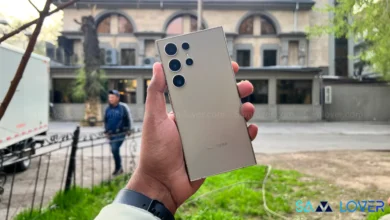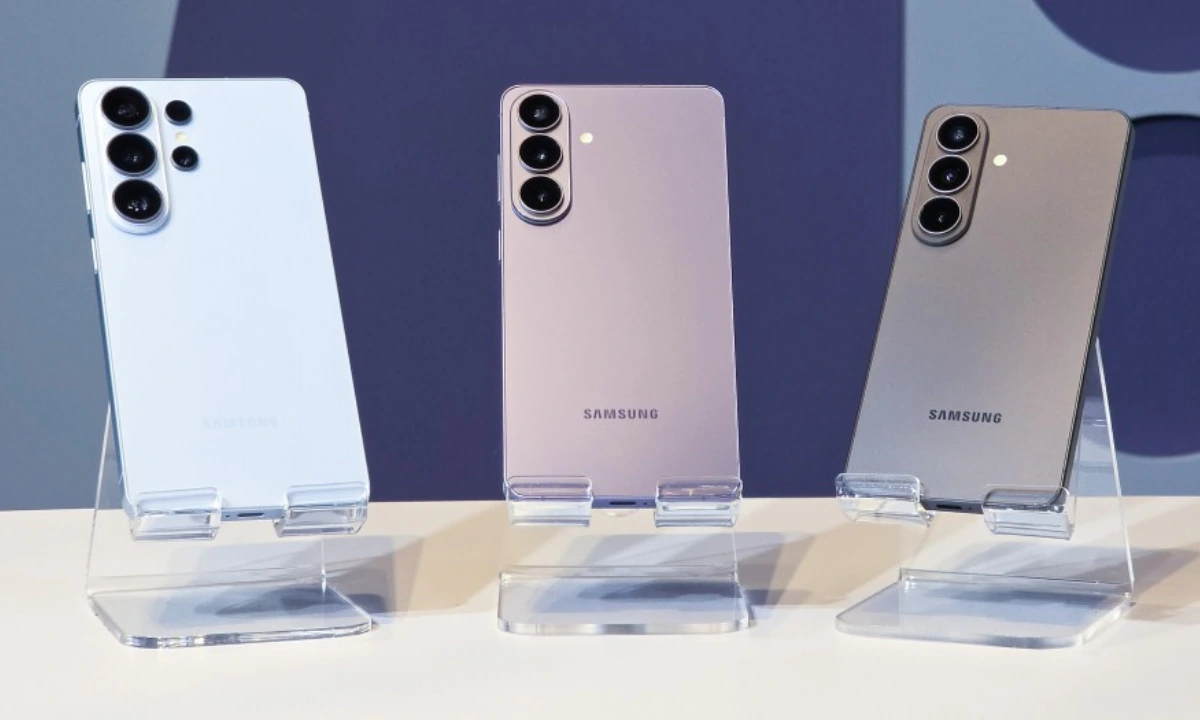
The Galaxy S26 series is official, and while the hardware is refined across the board, one omission is generating more discussion than most of the actual announcements: silicon-carbon batteries are still nowhere on a Samsung flagship.
Sung-Hoon Moon, Executive VP and Head of Samsung’s Smartphone R&D team, addressed this directly in a press conference held just before Galaxy Unpacked 2026. His answer was straightforward. The technology hasn’t reached the maturity Samsung requires for its flagship lineup, and user experience remains the company’s benchmark for adoption.
The Numbers Tell Part of the Story
The S26 ships with 4,300 mAh, the S26+ with 4,900 mAh, and the S26 Ultra with 5,000 mAh. Charging speeds remain conservative. Chinese manufacturers, by contrast, have been pushing aggressively on both fronts for well over a year, and the gap is becoming harder for Samsung to quietly ignore.
Devices like the OPPO Find X9 Pro have already demonstrated that silicon-carbon cells can deliver real, user-facing improvements in daily conditions. So the “not mature enough” reasoning deserves some scrutiny, even if it isn’t entirely without merit.
Why Samsung’s Caution Has a Legitimate Basis
The Galaxy Note 7 is the obvious reference point. That episode reshaped how Samsung handles battery risk internally, and the caution that followed is still visible in every hardware decision the company makes around power.
There is also a longevity concern specific to silicon-carbon chemistry. These batteries achieve higher energy density than conventional lithium-ion cells, but they are known to degrade faster over repeated charge cycles. With Samsung committing to seven years of software support for the S26 series, a battery that noticeably deteriorates within a few years creates a genuine product contradiction.
That tension is the real reason Moon’s explanation carries some weight, even as competitors move faster.Samsung will eventually bring silicon-carbon batteries to its flagships. When it does, the improvement will need to be substantial enough to justify the wait, because the narrative around its hardware ambition is already shifting in ways that are difficult to reverse.
Via- Tech Radar