News
Samsung’s Privacy Display Tech Just Got Independently Certified — Here’s Why That Actually Matters

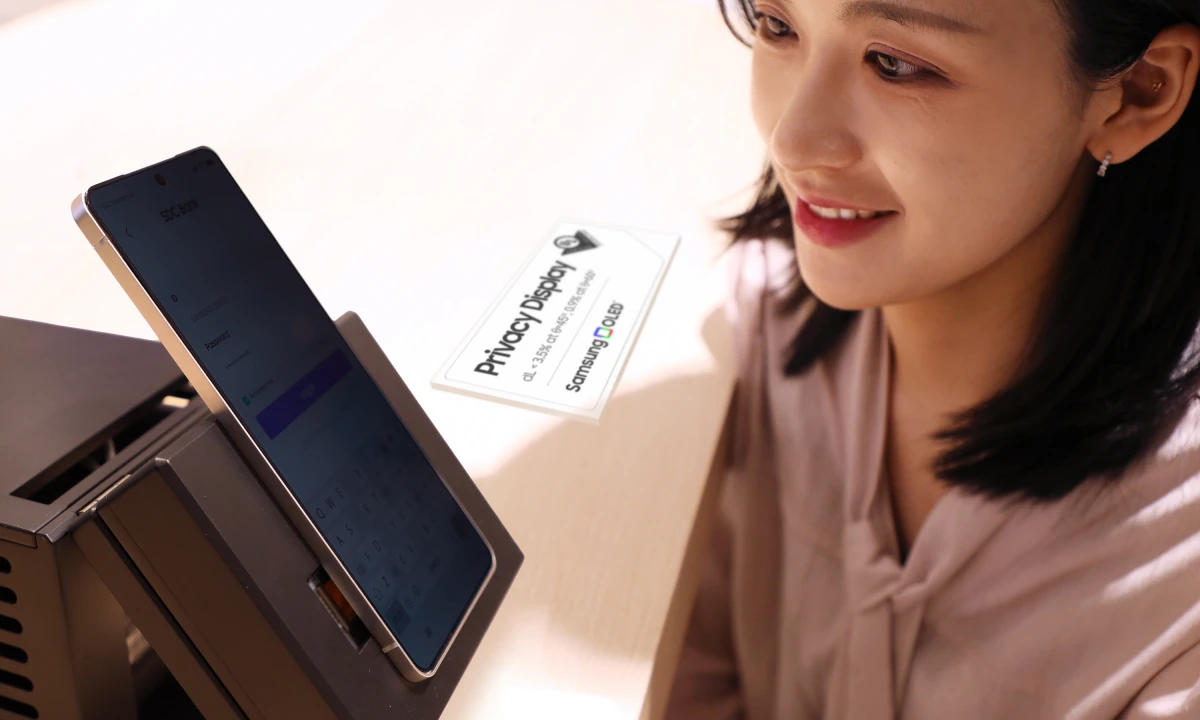
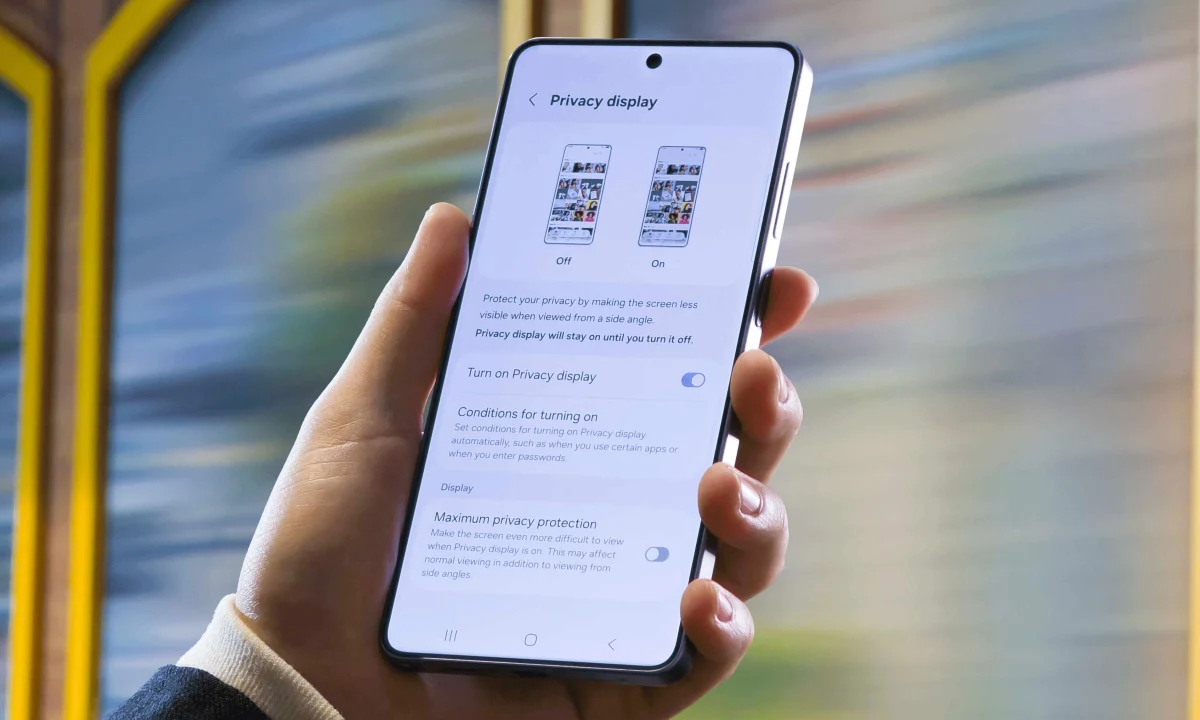
For years, smartphone privacy screens were a niche accessory. The kind of thing you’d find stuck onto a laptop in an open-plan office or a bank teller’s terminal. The idea that a phone could do this natively, with no film, no filter, and no noticeable compromise, always felt more like a concept than a product reality.
Samsung Display is now pushing that boundary further, and this time it has an independent certification to back up its claims.
The Certification That Changes the Conversation
UL Solutions, a globally recognized testing and certification body, has independently verified the privacy performance of Samsung Display’s Flex Magic Pixel (FMP) OLED technology. This matters more than it might seem at first glance.
Manufacturers make bold display claims constantly. Brightness figures, color accuracy ratings, efficiency numbers — most of these come from internal testing, and they’re rarely questioned. But when a third party like UL Solutions runs the measurements and publishes the results, the claim carries a different weight entirely. It’s the difference between a company telling you how good it is and someone else confirming it.
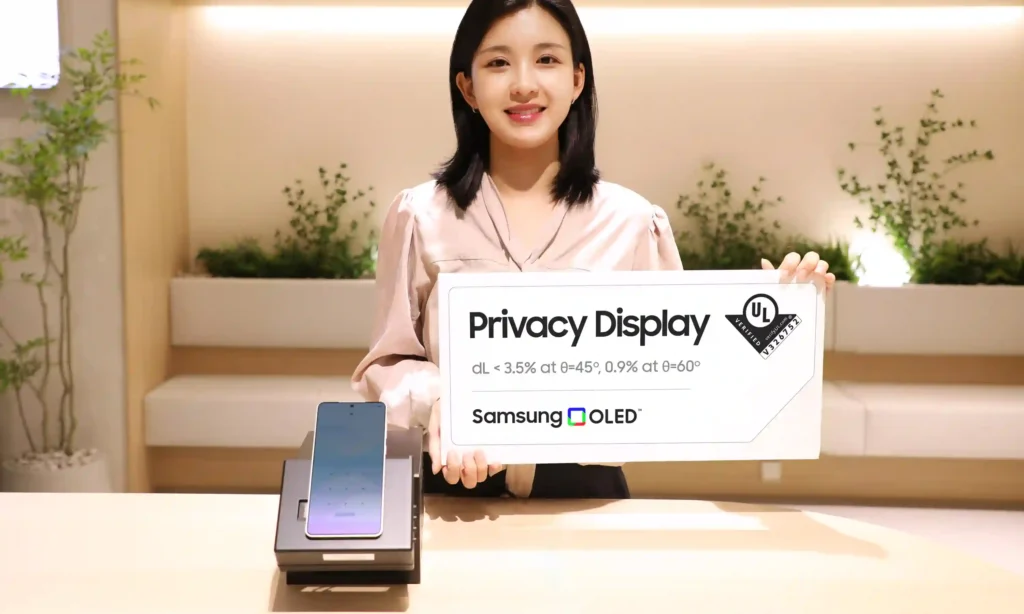
What UL Solutions confirmed is that the FMP panel retains just 3.5% of its brightness when viewed at a 45-degree angle, dropping further to 0.9% or less at 60 degrees. To put that in practical terms, a standard smartphone display typically holds onto around 40% of its brightness when someone glances at your screen from the side. The FMP panel brings that down to a fraction. At 45 degrees, the content is roughly one-thirtieth as bright as it appears straight-on. At steeper angles, it falls below one-hundredth.
That’s not incremental. That’s a structural difference.
How the Physics Actually Works
This kind of angular light control doesn’t happen through software or clever filtering on top of an existing panel. It requires rethinking how the display is built at the subpixel level.
Samsung Display re-engineered something called the Black Matrix — the structure that physically separates red, green, and blue subpixels on an OLED panel. Rather than using a single-layer separator, the company developed a multi-layer light-blocking architecture. The goal is precise control over how light exits each subpixel, which are only a few micrometers wide. By stacking these blocking layers strategically, light spreading outward at an angle gets absorbed rather than transmitted.
This is precision engineering at a scale most people rarely think about when they tap on a glass screen.
The privacy structure is also integrated into Samsung’s polarizer-free OLED platform, which the company calls LEAD. This platform was already notable for improving brightness output and reducing power draw by eliminating the polarizer layer that conventional OLEDs use. The combination of FMP privacy control built on top of this foundation is now branded LEAD 2.0, and Samsung Display says it improves power efficiency alongside the privacy performance.
Since 2020, Samsung Display has filed approximately 150 patents covering the technologies that make this possible.
Why Independent Verification Is the Real Story
Samsung could have announced Flex Magic Pixel, posted its internal benchmark numbers, and called it a product launch. The fact that it went to UL Solutions for third-party certification suggests it’s positioning this technology for a broader commercial rollout, not just a flagship feature.
Certification by an independent body makes a technology easier to license, easier to market to other device manufacturers, and more defensible in competitive benchmarking. It also signals that the company is confident enough in the performance to let someone else measure it.
Samsung Display hasn’t announced which specific devices will carry the technology beyond what’s already publicly associated with it. The Samsung Galaxy S26 Ultra is the obvious early recipient, giving Samsung’s own hardware a meaningful first-mover position. But the more interesting part of the story is what happens next. Reports suggest Chinese smartphone manufacturers are already evaluating the technology, with flagship releases potentially following around September.
If that timeline holds, the Galaxy S26 Ultra won’t have privacy display technology to itself for long. But right now, it does.
What This Means for Anyone Buying a Phone in 2025
The practical upside of native privacy display technology is straightforward: you don’t need a film. You don’t sacrifice significant screen real estate. You don’t deal with the color distortion or reduced brightness that stuck-on privacy filters always introduced. And you get protection that activates across the entire screen, not just one portion of it.
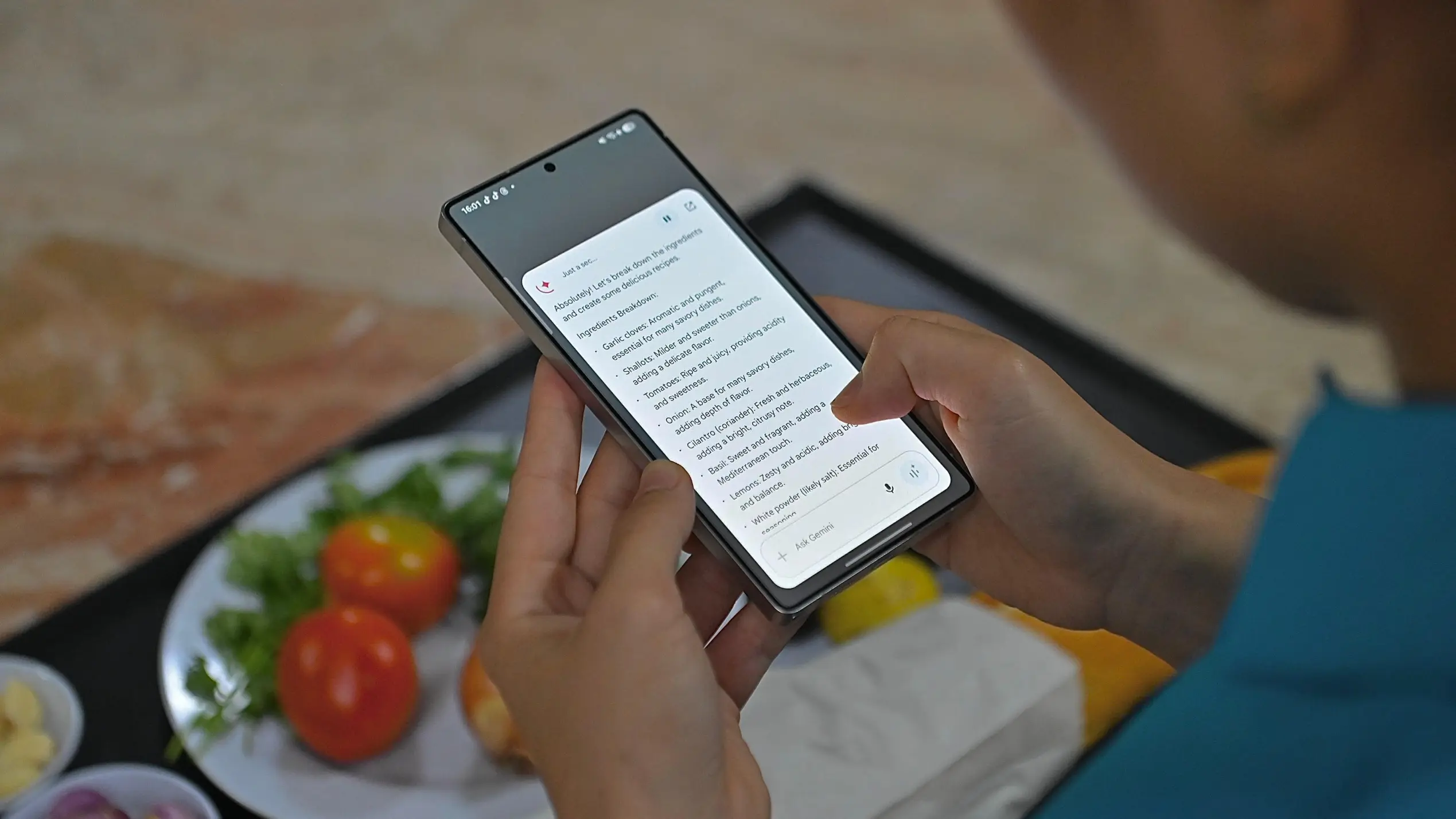
For people who use their phones in public settings for anything sensitive — banking, messages, work email, medical apps — this is a feature worth paying attention to. It’s not about paranoia. It’s about the basic reality that screens are visible to anyone nearby, and most people simply don’t think about it until they’re already on a train and someone next to them is reading every word.
The certification from UL Solutions doesn’t just validate Samsung Display’s numbers. It signals that this category of display technology is mature enough to be tested, verified, and taken seriously.
That’s a meaningful shift from where privacy displays were even two years ago.